How Continuous Controls Monitoring Delivers Massive Returns Across Cybersecurity and Compliance
In a world where cyber threats multiply by the hour and regulators tighten their grip, and with boards asking “what are we doing to stay ahead”, cyber security teams in banks are under immense pressure to stay resilient.
And yet, despite solid cybersecurity budgets, many institutions still operate on periodic control testing, static compliance checklists, and siloed systems. It’s not sustainable — or secure.
That’s where Continuous Controls Monitoring (CCM) comes in. It’s not just a cybersecurity upgrade — it’s a financially justifiable investment. For banks of all sizes, CCM delivers ROI through two powerful lenses: reduction in ransomware-related losses, and avoidance of regulatory penalties under DORA and NIS2.
Let’s break it down.
Ransomware: A Financial Threat That’s Not Going Away
Ransomware attacks on financial services have surged in frequency and impact. According to Sophos’ 2023 report, 65% of financial organizations were hit by ransomware in the prior 12 months. The average cost of a ransomware attack for a financial institution? Around $2.58 million, factoring in downtime, recovery, ransom payments, legal costs, and reputational damage.
Let’s run the numbers:
- Probability (P) of attack = 65%
- Average Loss (L) = $2.58M
- Annualized Loss Expectancy (ALE) = 0.65 × $2.58M = $1.677M
With CCM in place — continuously monitoring technical controls, patching gaps, flagging misconfigurations in real time — it’s realistic to expect at least a 60% reduction in ransomware-related loss.
Risk Avoided with CCM = $1.006M
Assuming an average annual platform cost of $100K, the ROI is 906%.
That’s $9 saved for every $1 spent.
But for Tier 1 global banks, where ransomware losses often exceed $5 million per incident, the ROI is even more compelling:
- ALE = 0.65 × $5M = $3.25M
- CCM Risk Avoided (60%) = $1.95M
- ROI = 1,850%
For every $1 spent on CCM, a Tier 1 bank could avoid $18.50 in ransomware-related losses.
The Compliance ROI: DORA and NIS2 Are Here
It’s not just cyber risk banks need to worry about — regulatory risk is just as financially significant.
The Digital Operational Resilience Act (DORA) applies to all EU-regulated financial institutions, requiring them to prove ICT risk management, real-time monitoring, incident response, and third-party risk oversight. Failure to comply can result in fines up to 2% of global turnover or €10 million — whichever is greater.
NIS2, Europe’s updated network and information systems directive, similarly mandates banks (as “essential entities”) maintain cyber hygiene, enforce supply chain security, and report major incidents. Penalties also stretch to 2% of global turnover.
Let’s say a mid-sized bank has an annual turnover of $1.5B:
- 2% DORA/NIS2 fine risk = $30M
- Assuming a 5% chance of a significant non-compliance event per year:
- Regulatory ALE = $1.5M
- CCM avoids 60% = $900K
- ROI = 800%
That’s $8 saved for every $1 invested, just on compliance.
Now consider a Tier 1 bank with $5B turnover:
- Regulatory exposure = $100M
- 5% probability = $5M ALE
- 60% mitigated = $3M risk avoided
- ROI = 2,900%
It’s clear: CCM doesn’t just reduce cyber risk — it actively protects against compliance failures that could cost millions.
The Strategic Payoff: Beyond Cost Avoidance
Sure, the numbers speak for themselves. But the real value of CCM goes deeper:
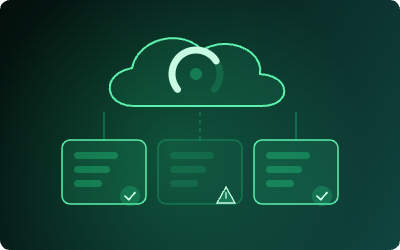
- Real-time visibility across cloud, on-prem, and third-party environments
- Faster remediation cycles
- Audit readiness on autopilot
- Unified reporting across cyber, risk, and compliance teams
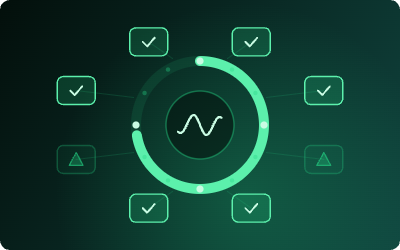
In short, CCM removes the blind spots that both attackers and auditors exploit.
Why Wait?
CCM delivers tangible, measurable ROI for banks — whether you’re protecting against ransomware, defending against regulatory fines, or proving operational resilience to the board.
In today’s threat landscape, not knowing is not an option. And periodic compliance is not enough.
With CCM, banks don’t just monitor controls — they regain control.
Book a chat here with a member of the team to learn more, at a time that suits you.