Most organisations don’t have a control problem, they have a confidence problem.
Controls exist on paper.
Tools are deployed.
Frameworks are mapped.
But when the auditor calls, the regulator visits or the board asks what the security posture looks like today, the answer is drawn from a snapshot taken weeks ago, manually compiled and already out of date.
Emerging around 2012, Continuous Controls Monitoring (CCM) began to gain traction as a technology that could automate the ongoing testing of controls effectiveness. But as the technology developed, CCM evolved to close that gap between manual controls testing to continuous and 24/7.
Today, CCM is fast becoming the technology at the heart of business impact intelligence.
What defines Continuous Controls Monitoring?
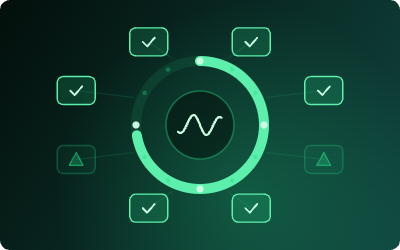
Continuous Controls Monitoring is the practice of automatically and continuously verifying that an organisation’s controls are working as intended across security, compliance and operational risk. It then turns that verification into real-time, defensible evidence.
Three words do the work in that definition:
- Not annual, not quarterly, not on-demand for audit. Controls are tested all the time, against live data.
- Not gathered by hand from screenshots, spreadsheets, and email chains. Connected directly to the source systems.
- Not threats, not events, not logs the mechanisms designed to prevent, detect, or respond to risk: MFA enforcement, patching SLAs, leaver deprovisioning, backup integrity, change approvals, access reviews, and so on.
With CCM, businesses gain an accurate, live picture of how well the organisation is protected – defensible to a regulator, intelligible to a board and actionable for the operational teams who need to fix what’s broken.
How Continuous Controls Monitoring differs from what came before
CCM is sometimes confused with adjacent categories. The distinctions matter, because the tools most organisations already have were not designed to do the same job.
Traditional GRC platforms are excellent at documenting controls, managing audit workflow and producing policy artefacts. They are not designed to test whether the documented controls are actually being followed in production. The control description lives in the GRC tool; the control itself runs somewhere else entirely.
Point-in-time audits and assessments produce a snapshot which is only accurate for the day it was taken and immediately starts to age. By the time it lands in front of a regulator, the environment has changed.
SIEM and security monitoring tools watch for events and threats in log data. They are oriented to detection and response, not to verifying that the preventative controls are still configured correctly. A SIEM tells you something bad has happened; CCM tells you whether the thing meant to stop it is still working.
Compliance-specific tools; for ISO 27001, SOC 2, PCI DSS and others tend to be framework-bound. CCM is framework-agnostic by design, mapping the same underlying control evidence into whichever frameworks the organisation needs to demonstrate against.
In short: GRC documents, SIEM detects, audits sample. CCM continuously verifies.
What Continuous Controls Monitoring monitors
CCM monitors the controls that determine whether an organisation is secure, compliant and resilient. In practice, that includes things like:
Identity and access controls
- Is MFA enforced across all privileged accounts?
- Are leavers being deprovisioned within SLA?
- Are dormant accounts identified and removed?
Vulnerability and patch management
- Are critical patches being applied within the policy window?
- Where are the exceptions and are they tracked?
Configuration and posture
- Are cloud environments configured to baseline?
- Are exceptions documented and approved?
Data protection
- Is sensitive data classified and access-controlled?
- Are encryption controls applied where required?
Resilience
- Are backups completing successfully?
- When were they last tested?
Operational controls
- Are change approvals being followed?
- Are segregation-of-duties policies enforced?
The same evidence that satisfies a control objective can usually be mapped to multiple compliance frameworks which is why CCM dramatically reduces the duplication of effort that comes with managing ISO 27001, SOC 2, DORA and internal audit obligations in parallel.
How it works
The mechanics of Continuous Controls Monitoring are as follows:
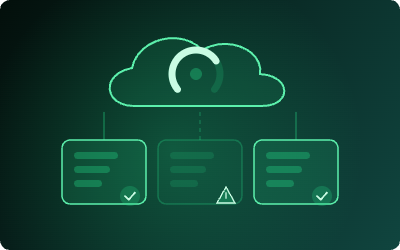
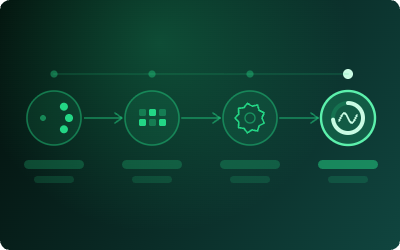
- Connect to the source systems where controls actually run; security tools, cloud platforms, identity providers, IT service management systems, CMDBs, SaaS applications, and any other estate the organisation runs.
- Aggregate and normalise the data so the same control evidence can be assessed consistently, regardless of where it came from.
- Test continuously against control definitions – the rules that describe what “working” looks like.
- Flag failures and drift in real time, surfacing issues to the people who can fix them.
- Map and report the results into compliance frameworks, technical dashboards, and board-level summaries, all drawn from the same underlying evidence.
When this works well, audit evidence becomes a by-product of the platform running, not a project the organisation has to mobilise for. CCM becomes your live, always on, actionable intelligence that unifies all three lines of defence.
How Continuous Controls Monitoring relates to GRC
We’re often asked the question ‘if we already have a GRC platform, why do we need CCM?’
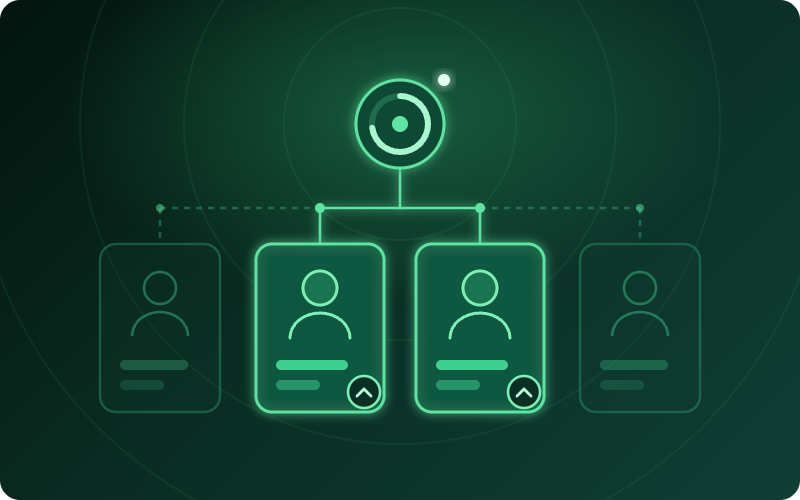
It’s simple: they do different jobs. GRC platforms are built around policy, documentation and workflow, defining controls, mapping them to frameworks, managing risk registers and orchestrating audit cycles. CCM is built to verify, automatically and continuously, that the controls described in the GRC platform are actually working in production.
The GRC platform holds the authoritative statement of what should be true. CCM supplies the live evidence of what is true. They are complementary tools, and most mature organisations use them together. In fact, some might say that Continuous Controls Monitoring brings to life the information within the GRC – the powerhouse that provides the actionable intelligence to the information stored in there.
We’ve written about this in more depth in How CCM is GRC’s best friend – it’s worth a read if you’re weighing how the two categories fit together in your environment.
Why Continuous Controls Monitoring matters now
Several forces have moved CCM from “nice to have” to “must-have” for any organisation.
- Regulatory expectations have tightened sharply.
DORA brings new operational resilience requirements for financial services. NIS2 expands scope dramatically across critical sectors. The FCA’s operational resilience rules require firms to demonstrate that important business services can withstand disruption. SEC cyber disclosure rules require timely, accurate reporting of material incidents. None of these regulations are well-served by spreadsheets and quarterly reviews.
- Environments have become harder to monitor.
Cloud workloads, SaaS estates, third-party integrations, and identity sprawl mean the attack surface is larger and more dynamic than the tools and processes designed for an on-premises world. IBM’s 2024 Cost of a Data Breach Report put the global average breach cost at USD 4.88 million, and found that more than a third of breaches involved shadow data — information stored in unmanaged sources.
- Manual compliance is breaking under the load.
Audit prep that once took weeks now takes months. Findings repeat year on year because nobody has the bandwidth to address the root cause. Security and compliance teams spend a disproportionate share of their time gathering evidence rather than reducing risk. CCM turns that around – evidence is produced continuously as a by-product of the work, rather than the work itself.
- Cybercriminals do not sleep.
Cyber-attacks have become ever evolving at a rapid rate, and now with artificial intelligence allowing cyber criminals to work faster, never has there been more of a imperative than now to ensure that you are monitoring your business ecosystem in real time, continuously.
Where Quod Orbis fits in
Quod Orbis is a Continuous Controls Monitoring platform, and one that has evolved beyond what the category has traditionally delivered. We connect to any data source you already have – security tools, cloud platforms, identity providers, IT service management systems, CMDBs, SaaS estates, as well as GRCs – and pull disparate data into a single, holistic view of your business ecosystem. We give businesses a live source of truth for security, compliance and risk posture, visible in real time to operational teams, security leaders and the board.
What distinguishes the Quod Orbis platform is the Business Impact Intelligence dashboard. Traditional CCM tells security and compliance teams whether a technical control is working; Business Impact Intelligence translates that picture back into business terms, connecting control performance to the business services, regulatory obligations and operational outcomes it actually affects.
A security engineer will understand that MFA is not being enforced on this account group, but the board will understand what could affect the crown jewels of the business and understand what that means for financial risk, brand reputation, regulatory and customer trust, operational resilience and response and recovery.
This is the direction we believe Continuous Controls Monitoring is heading: not just a tool for technical assurance, but a business intelligence layer that makes cyber and compliance posture legible to the people responsible for acting on it.
To understand more about how organisations adopt CCM in practice – the stages, the common blockers and what good progress looks like – see our companion piece on How Organisations Adopt CCM.
For a deeper dive into the foundational role of asset visibility, see Continuous Asset Visibility.
A final few things worth knowing
There are a few common misconceptions to look out for:
- You don’t have to be cyber-mature to adopt CCM. It is often described as the destination for already-mature organisations. In practice, it’s a maturity enabler, not a maturity prerequisite. We cover this and other common myths in our booklet, 5 Myths About Continuous Controls Monitoring.
- CCM is not a replacement for your existing security tooling. It works with the tools you already have, drawing evidence from them rather than displacing them.
- CCM is not just for compliance teams. Executed well with the right platform, it serves security, risk, audit, and executive stakeholders from the same underlying evidence base.
If you’d like to talk about how CCM could work in your environment, get in touch.