Healthcare organisations are facing a crisis that goes far beyond patient care. In recent years, hospitals, clinics, and health systems have become primary targets for ransomware attacks—and the consequences are devastating.
According to the 2024 Sophos State of Ransomware in Healthcare report, 67% of healthcare organisations were hit by ransomware in the past year alone. That’s more than two-thirds of the industry, a staggering statistic that reflects the sector’s ongoing vulnerability. And when it happens, it’s not just files that get locked—it’s patient records, appointment systems, diagnostic tools, and even life-saving equipment.
The cost? Astronomical. IBM’s 2023 Cost of a Data Breach Report found that healthcare had the highest average breach cost for the 13th consecutive year, clocking in at $10.93 million per incident. That figure includes detection, escalation, response, and long-tail reputational damage. And let’s not forget ransomware-specific costs: ransom payments, system rebuilds, regulatory fines, and lost revenue due to service outages.
So how do healthcare organisations get ahead of this? The answer lies in real-time visibility and proactive defence—and that’s where Continuous Controls Monitoring (CCM) becomes mission-critical.
The ROI of Continuous Controls Monitoring for Healthcare
Let’s break it down.
To calculate Annualised Loss Expectancy (ALE) from ransomware—a common ROI method—we need two things:
- P (Probability of ransomware attack)
Based on industry data from Sophos, this is 0.67 (67%). - L (Average financial loss per incident)
IBM’s report gives us $10.93 million.
ALE = P × L
ALE = 0.67 × $10.93M = $7.32 million
That’s the average expected annual loss per healthcare organisation. This doesn’t even include intangible costs like the unquantifiable loss of patient trust or regulatory sanctions under HIPAA, GDPR, or the UK’s DSP Toolkit.
Now, compare that with the cost of implementing CCM—a platform that integrates with your existing infrastructure connecting to every part of your organisations ecosystem, to monitor, measure, and alert on control weaknesses in real time. In most medium-to-large healthcare organisations, the cost of a robust CCM deployment typically ranges from $70K to $150K annually depending on scope, complexity, and scale.
Even at the high end, we’re talking about a potential 5x ROI ($7.32M ÷ $150k) just in risk reduction alone, not counting time saved on audits, improved cyber hygiene, or operational efficiency.
Why Healthcare Needs CCM Right Now
The traditional approach to cyber security—manual reviews, quarterly control testing, retrospective compliance checks—simply isn’t enough. Manually monitoring controls is a hidden cost sink for enterprise businesses. On average our enterprise clients estimate it costs around £1,500 per control test—and that’s just for execution. It doesn’t include the hours spent chasing data, formatting evidence, or explaining control failures across the first and second lines of defence.
Now scale that up:
- 1,000 controls x £1,500 = £1.5M per round
- Quarterly testing = £6M annually
And that’s before factoring in the inefficiencies, delays, and lost productivity.
And that’s not even the worse of it. Organisations also need to wake up and realise this other important factor; ransomware doesn’t wait for your next audit. It takes minutes, not months.
Here’s what Continuous Controls Monitoring changes:
- Real-time Risk Visibility
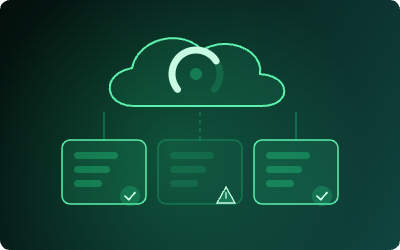
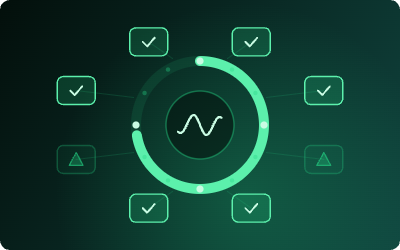
CCM gives healthcare IT and security teams a live view of their entire control environment. If patching falls behind, if privileged access is misconfigured, or if endpoint protection isn’t running on a device, you know instantly—not after a breach. - Faster Response Times
In an environment where seconds matter, CCM helps security teams act before a misconfiguration becomes a compromise. Alerting, correlation, and prioritisation are built-in. - Audit-Ready, Always
With constant evidence collection and automatic mapping to regulatory frameworks (HIPAA, ISO 27001, DORA, etc.), CCM ensures healthcare providers are continuously compliant—not scrambling before assessments. - Reduced Staff Burden
In underfunded and overstretched healthcare environments, CCM automates what used to be hours of manual work, freeing up teams to focus on critical tasks.
The Bottom Line
The healthcare industry has never been more at risk. Ransomware attackers are exploiting outdated systems, overworked teams, and fragmented defences. And the price of inaction is no longer theoretical—it’s playing out in real-world incidents every week.
Continuous Controls Monitoring isn’t just another security tool—it’s an essential layer of operational resilience. It provides the proactive intelligence needed to stop attacks before they happen, reduce risk exposure, and ultimately protect what matters most: patient safety.
When you can save millions and reduce organisational stress, all while strengthening compliance, visibility, and trust, it’s clear:
CCM is not a nice-to-have. For healthcare, it’s a necessity.
References:
- Sophos, State of Ransomware in Healthcare 2024
- IBM, Cost of a Data Breach Report 2023
- HIPAA Journal, Ransomware Attacks on Hospitals 2024
- Healthcare IT News, Why Healthcare is a Ransomware Magnet