Continuous asset visibility has become one of the most critical capabilities in modern cybersecurity. You cannot protect what you cannot see, and in today’s hybrid, cloud-connected, BYOD-driven IT environment, most organisations have more assets than they realise.
Cyber Asset Attack Surface Management (CAASM) is the discipline and technology that fixes this. Here is everything you need to know.
What is Cyber Asset Attack Surface Management (CAASM)?
Cyber Asset Attack Surface Management is an emerging security technology discipline that identifies, monitors and manages all potential points of entry or vulnerability within an organisation’s digital infrastructure.
The ‘attack surface’ refers to every entry point, interface, system and component that could be targeted by a malicious actor. CAASM makes that attack surface visible — continuously and automatically — so that security teams always know what they are protecting and where their risks lie.
Gartner recognised CAASM in its 2023 Hype Cycle for Security Operations as an important emerging category, validating what many security professionals had already discovered: that static, manual asset discovery is no longer sufficient.
Why has continuous asset visibility become so important?
The scale of the challenge has changed dramatically. A decade ago, most organisations had a relatively well-defined IT estate. Today, the combination of cloud migration, hybrid working, SaaS proliferation, BYOD policies and shadow IT means that the average enterprise is running assets it does not fully know about — and each one is a potential entry point for an attacker.
For larger enterprises operating a mixed estate of cloud, on-premise and legacy technology, this problem is particularly acute. Keeping security processes and policies the same as they were five years ago simply no longer works.
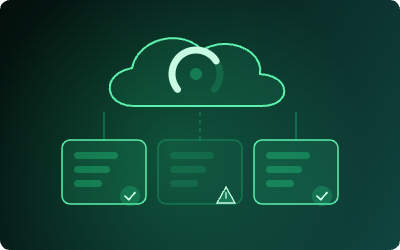
CAASM addresses this by creating a live, continuously-updated asset repository — replacing the point-in-time spreadsheet or annual audit with an always-on, automated view of your entire digital estate.
The key benefits of CAASM
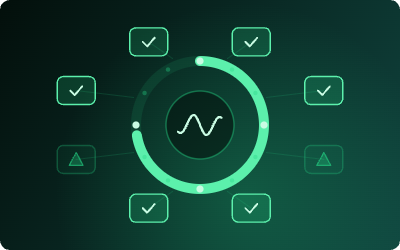
- Real-time security posture visibility. Rather than relying on periodic audits, CAASM delivers a continuously updated view of every asset and its risk status — giving security teams accurate, actionable intelligence at all times.
- Risk reduction. By identifying and addressing vulnerabilities proactively, organisations can significantly reduce the likelihood and impact of a successful cyberattack.
- Early threat detection. Continuous monitoring means that new assets, misconfigurations and emerging vulnerabilities are spotted immediately — rather than discovered after a breach.
- Regulatory compliance. DORA, ISO 27001, NIS2 and other frameworks increasingly require organisations to demonstrate control over their asset estate. CAASM makes this demonstrable and continuous rather than a point-in-time exercise.
- Reduced attack surface. By identifying unnecessary, outdated or misconfigured assets and services, organisations can systematically shrink the surface available for attackers to exploit.
- Faster incident response. When a breach does occur, knowing your estate means you can identify the source and scope far more quickly — reducing dwell time and limiting damage.
- Third-party risk management. CAASM extends visibility to assets and integrations associated with suppliers and partners — a critical consideration given the rise of supply-chain attacks.
Who needs CAASM?
CAASM is primarily relevant to organisations that manage complex IT infrastructures or hold sensitive data, typically larger enterprises and regulated businesses. However, any organisation that cannot afford a gap between what it thinks it has and what is actually running in its environment benefits from continuous asset visibility.
Within those organisations, the key beneficiaries include:
- Cybersecurity and IT security teams, who gain the visibility and tooling they need to manage vulnerabilities proactively
- Risk managers, who can make evidence-based decisions about risk levels using real-time data
- Compliance teams, who can monitor their regulatory position continuously rather than through manual, periodic assessments
- Developers and DevOps teams, who can identify and address vulnerabilities before they reach production
- Board and C-suite, who need clear, accurate reporting on cyber risk and operational resilience
How does a CAASM solution work?
Modern CAASM platforms use automation to connect to every data source within an organisation — cloud, on-premise, legacy systems, digital and non-digital — to deliver a single source of truth across the entire attack surface.
The Quod Orbis platform, for example, uses a low code/no code approach that means once connected to your data sources, actionable intelligence can be delivered within a matter of hours. Traditional asset management approaches can take weeks or months to produce a complete inventory — and that inventory is already out of date by the time it lands.
Key capabilities of a CAASM solution include:
- Continuous, automated asset discovery across all environments and asset types
- Real-time status monitoring of every discovered asset
- Full coverage of unmanaged, legacy and ‘forgotten’ assets that traditional tools miss
- Customisable views and alerting based on your organisation’s specific risk thresholds
- Integration with broader security and compliance platforms for end-to-end visibility
CAASM is the first step towards Continuous Controls Monitoring
For many organisations, CAASM is the start of a maturity journey towards Continuous Controls Monitoring (CCM).
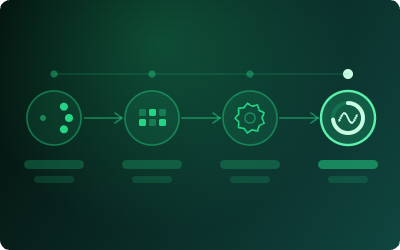
In order to monitor your security controls effectively, you first need to know exactly what you are protecting. CAASM creates the asset inventory that is the essential foundation for CCM. Once that foundation is in place, organisations can move to assess vulnerabilities and cyber risks, then to monitor their compliance against regulatory frameworks — and ultimately to achieve continuous, automated controls monitoring across the entire estate.
Quod Orbis CCM builds on the CAASM foundation to deliver real-time monitoring of all controls through a single source of truth, with expert operational support and board-level reporting included as standard.
A brief history of CAASM
CAASM has its roots in vulnerability management, which emerged in the early 2000s in response to the growth of the internet and the proliferation of software vulnerabilities. As the threat landscape evolved, so did the discipline.
In the 2010s, Attack Surface Management developed as a broader approach — encompassing not just software vulnerabilities but exposed services, misconfigurations and all points of potential compromise. Automation and continuous monitoring began to emerge as the dynamic nature of cloud, IoT and mobile environments made periodic assessments insufficient.
Today, CAASM represents the most mature iteration of this evolution: an always-on, risk-based, automated approach that not only identifies vulnerabilities but assesses their business impact and helps organisations prioritise their response.
This blog post provides an introduction to CAASM and continuous asset visibility. For a deeper dive — including a detailed look at how CAASM platforms work, the full maturity journey to CCM, and practical guidance on getting started — download the Quod Orbis CAASM Ebook.
Or if you would prefer to speak directly with our team and explore how continuous asset visibility would work in your specific environment, book a demo of the Quod Orbis platform.
Download the Ebook
Book a Demo